
What Is a Black Hole, Really?
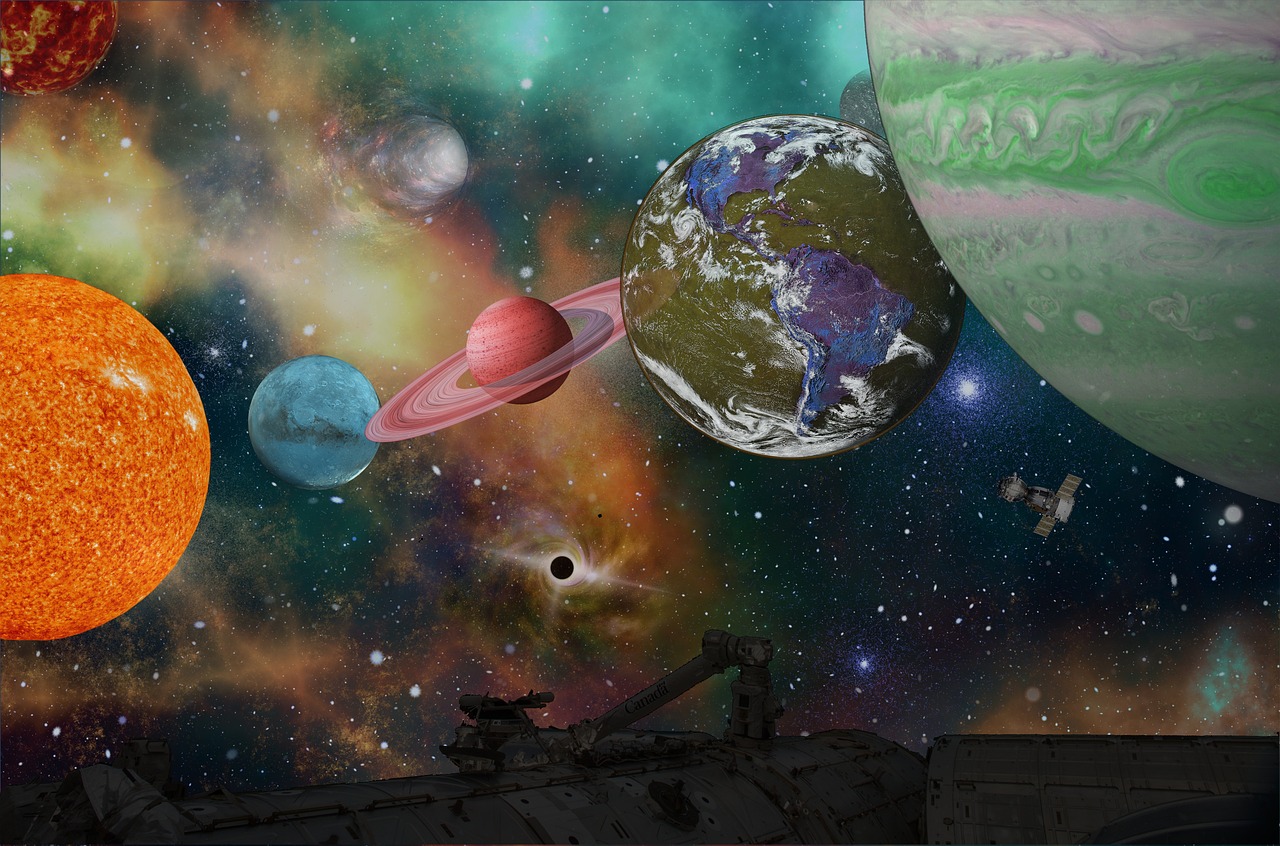
A black hole is a region of space where gravity is so strong that nothing, not even light, can escape. Think of it as the universe's ultimate vacuum cleaner - once you get too close, you're stuck. But unlike a vacuum, a black hole isn't just a hole in space; it's a point of infinite density called a singularity, wrapped in a boundary known as the event horizon.
How Do Black Holes Form?
Look, most black holes come from stars that are at least 20 times the mass of our Sun. When such a massive star burns out, it can't support its own weight and collapses in a super‑nova explosion. The core collapses into a tiny, incredibly dense point, and the outer layers are flung into space. The remnant core becomes a black hole.
There are other ways to make black holes:
- Stellar‑mass black holes - formed from collapsing stars (the most common).
- Intermediate‑mass black holes - still a mystery, but may form from dense star clusters.
- Supermassive black holes - millions to billions of solar masses, sitting in the centers of galaxies. Their exact birth story is still debated.
What Does the Event Horizon Do?

Quick story: the event horizon is the point of no return. It's not a physical surface; it's a mathematical boundary. If you cross it, your path inevitably leads toward the singularity. Light that gets too close bends around the black hole in a phenomenon called gravitational lensing, creating a "shadow" that telescopes like the Event Horizon Telescope can capture.
Why Do Black Holes Matter to Us?
Okay, real talk: black holes aren't just cosmic curiosities; they help us test the limits of physics. They force us to consider how gravity works under extreme conditions and challenge our understanding of space and time. Plus, they're the engines behind some of the universe's most energetic phenomena, like quasars and gamma‑ray bursts.
Key Physics Concepts Simplified
1. Gravity as Curvature of Spacetime
Here's something interesting: einstein's theory of General Relativity says massive objects warp the fabric of spacetime. A black hole is the ultimate warp - so much curvature that spacetime curves back on itself.
2. Schwarzschild Radius
This is the radius of the event horizon for a non‑rotating black hole. It's calculated by R = 2GM/c², where G is the gravitational constant, M is mass, and c is the speed of light. For a 10‑solar‑mass black hole, the Schwarzschild radius is about 30 kilometers.
3. Hawking Radiation (Yes, It Really Exists!)
In 1974, Stephen Hawking proposed that black holes can emit radiation due to quantum effects near the event horizon. Over astronomical timescales, this could cause black holes to evaporate, especially the tiny ones.
Common Myths About Black Holes (Busted)
- Myth: Black holes suck everything in. Reality: They only pull in matter that crosses the event horizon. Objects orbiting safely are fine.
- Myth: We can't see black holes. Reality: We see the effects - accretion disks, jets, and the shadow captured by telescopes.
- Myth: Black holes are dangerous to Earth. Reality: The nearest known black hole is thousands of light‑years away; it poses no threat.
Practical Ways to Visualize a Black Hole
Imagine a whirlpool in a pond. The whirlpool's center is the singularity, and the water swirling around represents the spacetime curvature. If you drop a leaf into the whirlpool, it spirals inward until it disappears - just like matter falling into a black hole. Sound familiar?
Another analogy: Picture a rubber sheet with a heavy ball in the center. The ball creates a depression; smaller balls roll toward it. The deeper the depression, the stronger the pull - just like a more massive black hole.
How Scientists Study Black Holes
- Electromagnetic Observations - X‑ray telescopes (e.g., Chandra) detect hot gas swirling in the accretion disk.
- Gravitational Waves - LIGO and Virgo detect ripples in spacetime from black hole mergers.
- Very Long Baseline Interferometry (VLBI) - Combines radio telescopes worldwide to image the black hole's shadow.
Future of Black Hole Research
Upcoming projects like the James Webb Space Telescope will probe the environments of distant supermassive black holes, while next‑generation gravitational‑wave detectors will catch mergers from the early universe. Each discovery tightens the constraints on how black holes grow and influence galaxy evolution. Not kidding.
Takeaway: Black Holes Are Both Cosmic Mysteries and Cosmic Laboratories
Little known thing: black holes may sound like science‑fiction villains, but they're actually essential tools that help us understand gravity, quantum mechanics, and the life cycle of galaxies. They remind us that the universe still has many secrets, and that curiosity is the best way to uncover them.
Frequently Asked Questions
What is the main point of this article?
The article explains black holes in plain language, covering their formation, physics, myths, and how we study them.
Who should read this?
Anyone curious about space who wants a clear, jargon‑free explanation of black holes.
What is the most important tip here?
Remember that a black hole's event horizon is a boundary in spacetime, not a physical wall - nothing can escape once you cross it.
Where can I learn more?
Check out reputable astronomy sites, science documentaries, and university physics courses that dive deeper into General Relativity.
Is this information current?
Yes, it reflects the latest consensus in astrophysics about black hole theory and observation.