
Introduction: A New Window to the Cosmos

For centuries, astronomers relied on light - visible, infrared, radio, X‑ray - to explore the universe. In 1916, Albert Einstein's General Theory of Relativity predicted that accelerating masses would generate disturbances in space‑time, much like a stone dropped in a pond creates ripples on its surface. These disturbances, called gravitational waves, travel across the cosmos at the speed of light, stretching and squeezing space itself. Until the first direct detection in 2015, they were a theoretical curiosity; now they are a powerful tool for probing the universe's most extreme phenomena.
How Gravitational Waves Are Generated
Gravitational waves are produced whenever a massive object undergoes a rapid change in its motion or shape. The most prolific sources include:
- Binary black hole mergers - Two black holes orbit each other, losing energy through gravitational radiation until they collide.
- Binary neutron star mergers - Similar to black holes but involving dense neutron stars; these events also produce heavy elements like gold.
- Supernova explosions - The collapse of massive stars can generate asymmetric gravitational waves.
- Rapidly rotating neutron stars (pulsars) with "mountains" - Even tiny deformations can produce continuous waves.
- Early‑universe processes - Inflation and phase transitions in the first fractions of a second may leave a stochastic background.
The strength of a wave depends on the mass involved, the distance to the source, and how rapidly the system evolves. The waves carry energy away from the system, causing the orbit of a binary pair to shrink and eventually merge.
What Do Gravitational Waves Look Like?
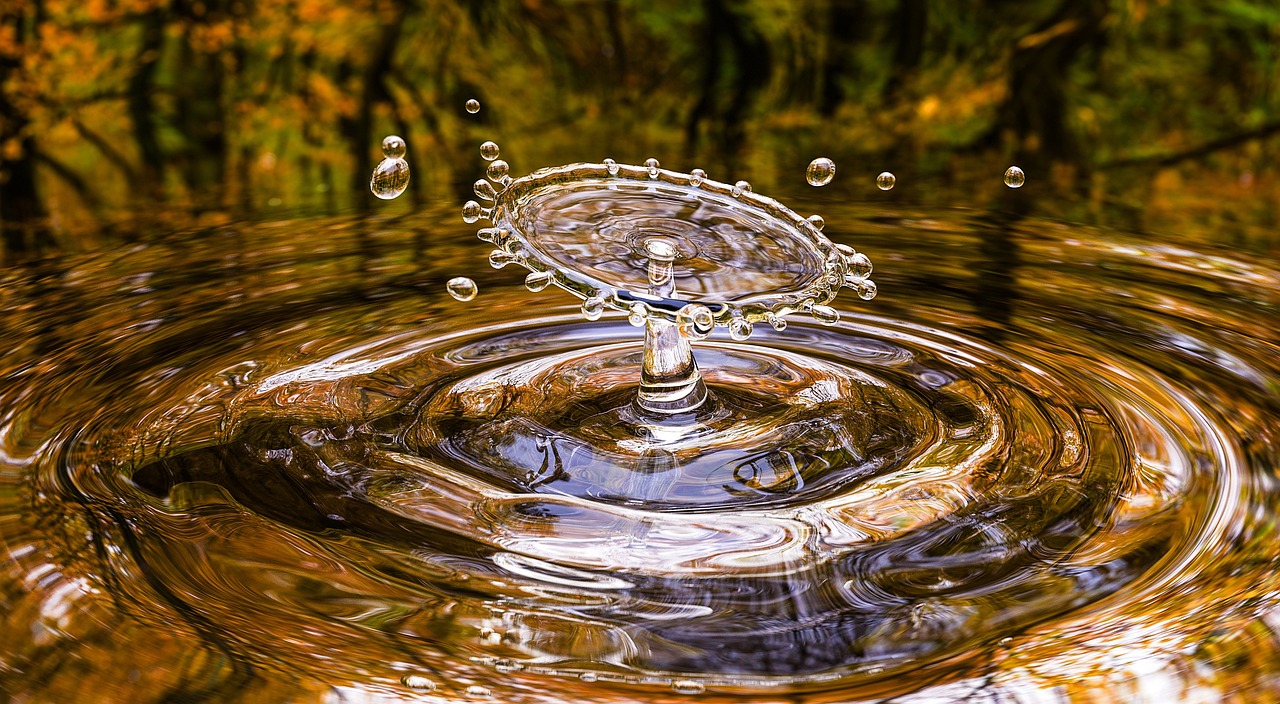
Unlike electromagnetic waves, which oscillate electric and magnetic fields, gravitational waves oscillate the very geometry of space. They have two polarization states - "plus" and "cross" - that stretch and compress objects perpendicular to the direction of travel. If a passing wave were to travel through a ring of test masses, it would alternately elongate the ring along one axis while squeezing it along the perpendicular axis, and then swap the roles. That's it.
Detecting the Subtlest Ripples
Because gravitational waves are incredibly weak by the time they reach Earth, detecting them requires unusual sensitivity. The two main ground‑based detectors are:
- LIGO (Laser Interferometer Gravitational‑Wave Observatory) - Two sites in the United States (Hanford, Washington, and Livingston, Louisiana).
- Virgo - A European detector located near Pisa, Italy.
Both detectors use laser interferometry: a laser beam is split and sent down two perpendicular arms, reflected back, and recombined. A passing gravitational wave changes the relative lengths of the arms by a fraction of a proton's diameter, creating an interference pattern that is measured with photodiodes. The combined sensitivity of LIGO and Virgo allows them to detect changes as small as 10 - 19 meters, less than one - thousandth the diameter of a proton.
Other Observatories and Future Projects
In addition to ground‑based detectors, scientists are building:
- KAGRA - A cryogenic, underground detector in Japan that reduces seismic noise.
- Einstein Telescope - A proposed third‑generation underground detector with improved low‑frequency sensitivity.
- Laser Interferometer Space Antenna (LISA) - A planned space‑based detector that will observe lower‑frequency waves from supermassive black hole mergers and galactic binaries.
Why Gravitational Waves Matter
Gravitational waves provide a unique probe of the universe:
- Testing General Relativity - By comparing the observed waveforms with predictions, we test Einstein's theory in the strong‑field regime.
- Studying Black Holes and Neutron Stars - Waves reveal the masses, spins, and orbits of compact objects, offering insights into their formation and evolution.
- Cosmology - The stochastic background could inform us about the early universe, inflation, and phase transitions.
- Multi‑Messenger Astronomy - Gravitational waves can be combined with electromagnetic and neutrino observations for a richer picture of astrophysical events.
- Fundamental Physics - Gravitational waves may uncover new physics beyond the Standard Model, such as extra dimensions or modifications to gravity.
Practical Ways to Get Involved and Learn More
Even if you're not a physicist, you can participate in the gravitational‑wave revolution. Here are some practical steps: Crazy, right?
- Follow LIGO/Virgo announcements - Their websites and Twitter feeds publish real‑time alerts whenever a new event is detected.
- Attend public lectures or webinars - Many universities and science centers host talks on gravitational waves.
- Use educational apps and simulations - Interactive tools let you visualize how waves stretch and compress space.
- Volunteer for citizen science projects - Projects like Gravity Spy help classify noise transients in detector data.
- Read popular science books - Titles such as "The Science of Gravitational Waves" provide accessible explanations.
These activities not only deepen your understanding but also build a community of enthusiasts who help keep the science alive.
Future Prospects: The Next Decade of Gravitational‑Wave Astronomy
As detectors become more sensitive, we expect:
- More frequent detections of binary black holes and neutron stars - potentially dozens per month.
- First detections of intermediate‑mass black holes, filling a missing piece of the black‑hole mass spectrum.
- Observation of gravitational waves from the early universe with space‑based detectors like LISA.
- Improved tests of gravity, including searches for deviations from General Relativity.
- Enhanced multi‑messenger campaigns, coordinating gravitational‑wave alerts with telescopes worldwide.
These advances will transform our understanding of the cosmos, opening new avenues for discovery.
Frequently Asked Questions
What is the main point of this article?
It explains what gravitational waves are, how they are produced and detected, why they are important for science, and how everyday people can engage with this exciting field.
Who should read this?
Anyone curious about the universe - from high school students to lifelong learners - who wants a clear, practical overview of gravitational waves and their significance.
What is the most important tip here?
Follow real‑time alerts from LIGO and Virgo to stay connected with the latest discoveries and join the growing community of gravitational‑wave enthusiasts.
Where can I learn more?
Check the official LIGO, Virgo, and LISA websites, read popular science books on gravitational waves, and explore educational simulations and citizen‑science projects.
Is this information current?
Yes, the article reflects the latest understanding of gravitational‑wave physics and the status of current and upcoming detectors. Wild.