
Introduction
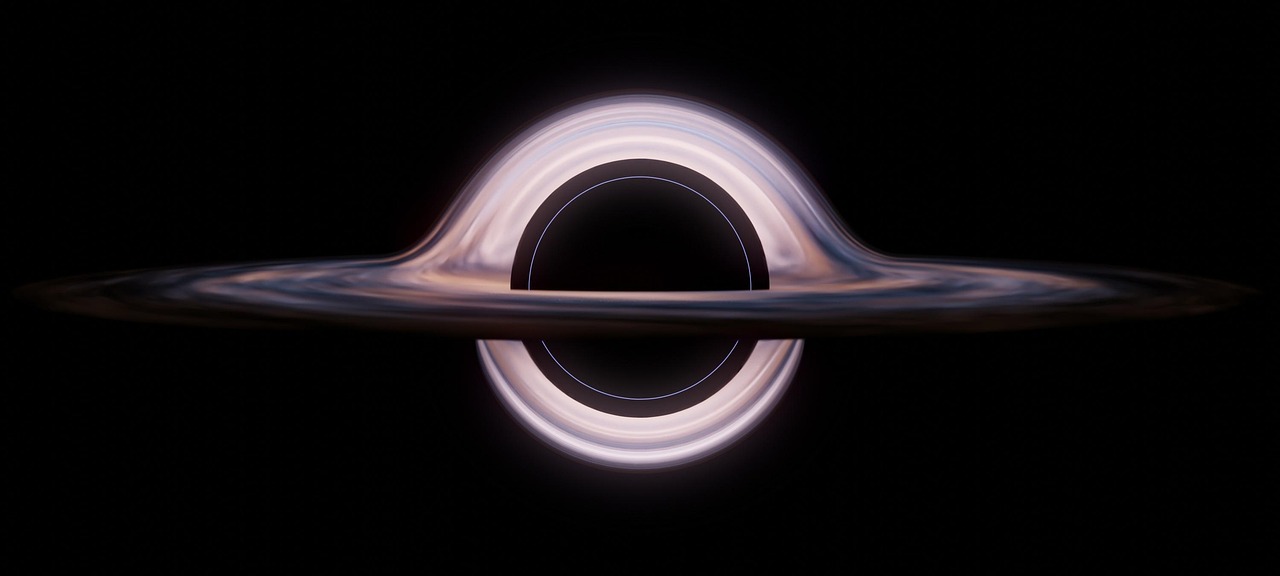
When we look up at the night sky, we often feel a sense of awe that transcends ordinary experience. That feeling is not merely emotional; it is rooted in the very structure of reality. One of the most deep discoveries of modern physics - gravitational waves - offers a tangible connection between the deepest laws of the universe and the human spirit. These ripples in spacetime, first predicted by Einstein's theory of general relativity, carry information from cataclysmic events such as colliding black holes and neutron stars, allowing us to listen to the cosmic symphony that surrounds us.
What Exactly Are Gravitational Waves?
Gravitational waves are distortions in the curvature of spacetime that propagate outward from accelerating masses. Think of spacetime as a vast, flexible fabric. When a massive object moves, it creates a disturbance that travels at the speed of light, similar to how a stone dropped in a pond generates ripples. Unlike electromagnetic waves, which require a medium like air or a vacuum, gravitational waves are inherent to the geometry of spacetime itself.
These waves are described mathematically by the Einstein field equations, and they are characterized by two polarizations - commonly referred to as "plus" and "cross." The effect of a passing wave is to alternately stretch and squeeze distances in perpendicular directions, an effect that is minuscule on Earth but measurable with state‑of‑the‑art detectors.
How Are Gravitational Waves Generated?

Only systems with major mass and a non‑symmetric acceleration can produce detectable gravitational radiation. The most powerful sources are: Crazy, right?
- Binary black hole mergers - When two black holes orbit each other, they lose energy through gravitational radiation, gradually spiraling inward until they coalesce.
- Neutron star collisions - Similar to black holes but with dense, solid remnants, these events emit both gravitational waves and electromagnetic counterparts (gamma‑ray bursts, kilonovae).
- Supernovae and core‑collapse events - The violent death of massive stars can generate asymmetric gravitational waves, though their signals are weaker.
- Early universe phenomena - Processes such as inflation or phase transitions may have left a stochastic background of waves permeating the cosmos.
In all cases, the key is a rapidly changing quadrupole moment - essentially, a mass distribution whose shape is changing in a non‑spherical manner.
Detecting the Subtle Ripples
Measuring gravitational waves is a technical marvel. The strain - the fractional change in length - induced by a passing wave is on the order of 10 - 21 or smaller. To sense such tiny distortions, physicists employ laser interferometers that compare the length of two perpendicular arms over kilometers.
Laser Interferometer Gravitational‑Wave Observatory (LIGO)
LIGO's twin detectors in the United States have been the flagship instruments. They use 4‑kilometer arms, high‑power lasers, and seismic isolation to detect the minute stretching and squeezing caused by passing waves.
Virgo and KAGRA
Europe's Virgo detector and Japan's KAGRA (which incorporates underground and cryogenic techniques) complement LIGO, allowing triangulation of source positions and improving sensitivity.
Future Prospects
- Space‑based detectors - LISA (Laser Interferometer Space Antenna) will be launched to space, with million‑kilometer arms, targeting lower‑frequency waves from supermassive black hole mergers.
- Pulsar Timing Arrays - By monitoring millisecond pulsars, scientists can detect nanohertz waves from supermassive black hole binaries.
- Next‑generation ground‑based observatories - Concepts like the Einstein Telescope and Cosmic Explorer aim to extend sensitivity and frequency range.
The Cosmic Message Encoded in Gravitational Waves
Each gravitational‑wave detection is a new chapter in our cosmic story. By analyzing the waveform - its amplitude, frequency, and phase - scientists can extract fundamental parameters of the source: masses, spins, distance, and even the equation of state of neutron star matter.
gravitational waves open a new window on the universe's expansion. By measuring the luminosity distance directly from the waveform, we can cross‑check the Hubble constant, potentially resolving current tensions between different measurement techniques.
A Spiritual Perspective: Listening to the Universe's Pulse
In many spiritual traditions, the cosmos is viewed as a living, breathing entity. Gravitational waves offer a scientific confirmation of this interconnectedness. The minute ripples that travel across the vastness of space remind us that every part of the universe is linked, that even the most distant cataclysmic event can leave a trace that reaches us.
Just as meditation invites us to become aware of subtle sensations, the detection of gravitational waves encourages a deeper awareness of the subtle dynamics that govern reality. The waves are silent, yet they carry deep messages - echoes of creation, destruction, and rebirth - inviting us to listen, reflect, and evolve.
Practical Takeaways for Everyday Life
- Embrace the unknown - Gravitational waves remind us that there are phenomena beyond our current grasp, encouraging curiosity and humility.
- Patience and persistence - The first detections required decades of theory, engineering, and patience. In our own pursuits, perseverance pays dividends.
- Interconnectedness - The global network of detectors shows how collaboration transcends borders. In personal relationships, shared goals build unity.
- Mindful listening - Just as we refine instruments to catch faint signals, growing mindful listening can help us hear the subtle wisdom of others and of ourselves.
Future Horizons: What Lies Ahead?
As detectors become more sensitive, we expect to witness a flood of new sources: intermediate‑mass black hole mergers, continuous waves from rotating neutron stars, and a stochastic background that may reveal physics beyond the Standard Model. Each new observation will deepen our understanding of the universe's birth, evolution, and ultimate fate.
In parallel, the integration of gravitational‑wave astronomy with electromagnetic, neutrino, and cosmic‑ray observations will usher in a truly multi‑messenger era, allowing us to probe the cosmos from multiple angles.