
Introduction
When people think of a flourishing era of knowledge and culture, the term "Golden Age" often conjures images of bustling scholars, grand libraries, and groundbreaking discoveries. The Golden Age of Islamic civilization - spanning roughly from the mid‑8th to the mid‑14th centuries - was a period when the Muslim world became the epicenter of scientific inquiry, philosophical debate, and artistic expression. In this age, ideas crossed borders through trade routes, scholarly exchanges, and the translation movement that brought ancient Greek, Persian, and Indian wisdom into Arabic, laying foundations that would shape the modern world.
Scientific Breakthroughs
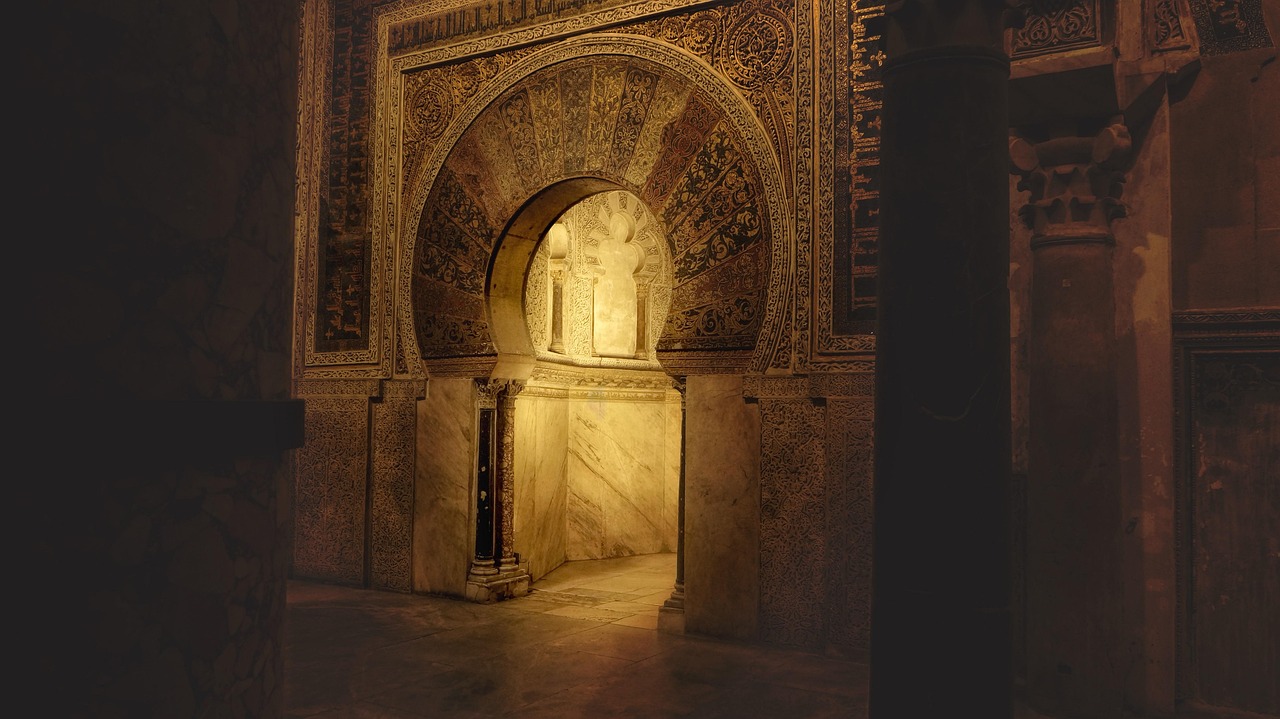
Central to this golden era was the pursuit of knowledge. Scholars in cities like Baghdad, Cairo, and Cordoba built vast libraries and observatories, creating environments where curiosity could thrive. They made lasting contributions in fields such as:
- Medicine: Physicians wrote comprehensive treatises on anatomy, pharmacology, and clinical practice, influencing European medical schools centuries later.
- Chemistry (Alchemy): Pioneering experiments in distillation and crystallization led to early chemical knowledge and the eventual birth of modern chemistry.
- Optics: Visionaries studied light, lenses, and vision, culminating in works that would inspire Renaissance scientists.
Mathematics and Astronomy
The love for numbers and the night sky drove mathematicians and astronomers to develop theories that remain relevant today. Key achievements include:
- Algebra: The term itself comes from the Arabic word "al - jabr," reflecting systematic approaches to solving equations.
- Trigonometry: Innovations in spherical trigonometry helped refine navigation and mapmaking.
- Planetary Models: Astronomers refined planetary orbits, producing more accurate ephemerides that guided calendars and navigation.
Philosophy and Literature

Beyond the hard sciences, intellectuals engaged deeply with ethics, metaphysics, and the human condition. Their works:
- Bridged Eastern and Western thought, integrating Greek philosophy with Islamic theology.
- Produced poetry that celebrated nature, love, and spirituality, influencing literary traditions across continents.
- Encouraged a culture of critical inquiry, encouraging scholars to question, test, and refine ideas.
Art and Architecture
Visual culture flourished as artisans combined function with beauty. Highlights of this creative surge include:
- Calligraphy: The art of elegant script became a revered discipline, turning religious texts into moving works of art.
- Architecture: Mosques, palaces, and libraries were designed with complex geometric patterns, domes, and minarets that still inspire architects worldwide.
- Miniature Painting: Detailed illustrations in manuscripts showcased narrative storytelling with vivid colors and precision.
Legacy and Impact
The Golden Age set the stage for the Renaissance and modern science. Its influence can be seen in:
- The translation of Greek classics into Latin, sparking European intellectual revival.
- The preservation and enhancement of ancient texts, ensuring knowledge survived the turbulent Middle Ages.
- The cultivation of a global intellectual network that values evidence, dialogue, and interdisciplinary study.
FAQs
Q: Why is this period called the "Golden Age"?
A: The term reflects the era's rich intellectual output, artistic achievements, and the widespread dissemination of knowledge.
Q: How did scholars share knowledge across regions?
A: Through trade routes, academic institutions, and translation projects, ideas were exchanged between scholars in Spain, North Africa, the Middle East, and beyond.
Q: Which cities were the major centers of learning?
A: Baghdad's House of Wisdom, Cairo's Al‑Qarawiyyin, and Cordoba's libraries were among the most influential hubs.
Practical Takeaways for Modern Readers
1. Value interdisciplinary study: The Golden Age reminds us that breakthroughs often arise at the intersection of fields.
2. Embrace translation and collaboration: Sharing ideas across cultures accelerates progress.
3. Prioritize curiosity - driven research: Many discoveries were born from the simple desire to understand the world.
4. Protect and preserve knowledge: Libraries, museums, and digital archives keep our collective wisdom alive for future generations.
By reflecting on this luminous chapter of human history, we can draw inspiration for today's scientific, artistic, and cultural endeavors.